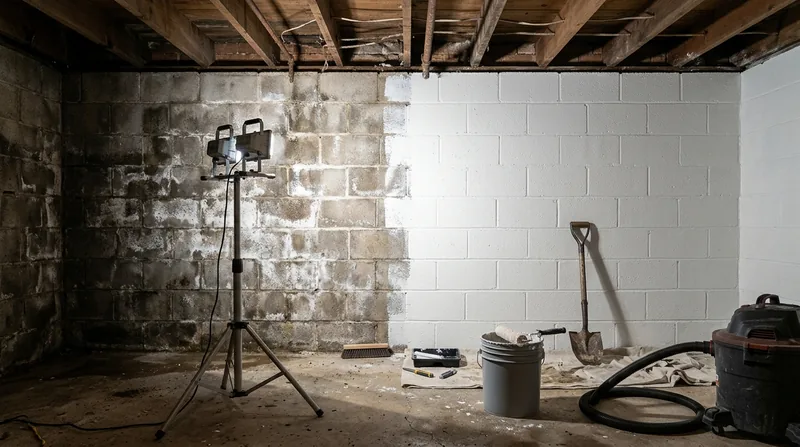




Basement Wall Sealing in Jonesboro: Stop the Damp Before It Spreads
Jonesboro sits on Crowley's Ridge, a narrow loess ridge rising out of the flat Arkansas Delta, and that geography drives everything we see in local basements. Homes on the ridge slopes near downtown, in the 1900s-1930s brick Craftsman and Tudor blocks, deal with water pushing laterally through old brick foundations. Homes on the flat ground east and south of town sit in Delta gumbo clay with a high water table that never drops far, even in a dry August. Basement Wall Sealing in Jonesboro is the first line of defense against that slow, persistent dampness that shows up as efflorescence, peeling paint, and a musty smell after every spring storm.
We are a dedicated below-grade specialist, not a general foundation firm and not a plumber. That focus matters because wall sealing is only the right answer for some of the calls we get. When the problem is surface dampness and minor seepage, a properly prepared and sealed wall solves it. When the problem is hydrostatic pressure from a saturated water table, sealing alone will fail, and we say so on the first visit. Start with a free basement inspection and we will tell you which problem you actually have.
Why Wall Sealing Matters on Crowley's Ridge and Across the Delta Clay
The dominant failure mode in Jonesboro is not a single dramatic crack. It is chronic dampness driven by a high water table and Delta gumbo clay that holds moisture against the foundation for weeks after a rain. Add long humid summers and heavy spring systems, and basement walls stay wet long enough for efflorescence to bloom and paint to blister. The older brick foundations near downtown are especially vulnerable because the mortar joints are softer than the brick and wick water readily.
- Efflorescence appears as a white salt bloom when water moves through the wall and evaporates on the interior face.
- Peeling paint and chalky masonry dust signal persistent moisture in the wall body, not just a surface stain.
- A musty smell that returns every spring points to damp masonry holding moisture through the humid season.
- Dark tide marks at the base of the wall after heavy rain show where water is wicking up from the footing.
- Cold joints and tie holes in 1950s-1970s brick ranches on the north and south sides seep steadily once the clay is saturated.
None of these symptoms mean the wall is failing structurally, but all of them mean moisture is moving through the masonry and needs to be addressed at the surface.
Key info: A 1960s brick ranch off Nettleton Avenue showed heavy efflorescence on the north wall every March. The wall was damp but sound. Cleaning and a penetrating sealer stopped the bloom, and the homeowner avoided an unnecessary excavation quote from another outfit.
If you want to understand how sealing fits into a full below-grade strategy, the basement waterproofing service page lays out the options. For local code questions on any drainage work that touches the foundation, the City of Jonesboro building department is the authority to call, and rules vary by jurisdiction.
How We Seal Basement Walls in Jonesboro, Step by Step
We do not sell a sealer as a cure-all. The process starts with diagnosis: we map where the moisture is coming from, check for hydrostatic pressure, and confirm whether the wall is structurally sound. Only then do we prep and seal. On ridge-side homes in Brookland and Bono, the slope can drive water laterally into the wall, and that changes what we recommend. On flat Delta lots in Lake City and Monette, the water table is the driver.
- We inspect the interior and exterior of the foundation and note crack patterns, efflorescence, and grading against the wall.
- We remove efflorescence with a dry brush and a mild acid wash, then let the masonry dry to a workable moisture level.
- We scrape loose paint and patch spalled mortar so the sealer bonds to sound substrate, not to failing material.
- We apply a penetrating sealer on porous brick and block, or a membrane coating where surface dampness is the issue.
- We extend downspouts and correct grading where we find water pooling against the wall, because sealing a wet wall is wasted money.
- We document what we did and tell you plainly if the wall needs more than sealing, such as injection or an interior drain.
The goal is a dry wall and an honest answer about whether sealing is the whole fix or just one part of it.
Key info: A 1920s Craftsman near downtown Jonesboro had soft mortar joints and a white bloom on the south wall. We repointed the joints, sealed the brick, and extended two downspouts. The wall stayed dry through the next spring. No excavation was needed.
If the inspection shows water entering at the wall-floor joint rather than through the wall face, the right answer is usually an interior drain tile system, not a sealer. We will tell you which one you need.
Sealing Approaches We Use and When Each One Fits
Not every damp wall needs the same product. The table below shows the approaches we use most often in Jonesboro and the conditions each one is built for. We pick based on wall material, moisture source, and whether the wall is structural masonry or a modern poured wall.
| Approach | Description | Best for |
|---|---|---|
| Penetrating sealer | Soaks into brick and block pores and blocks water migration without trapping vapor. | Porous brick and block with surface dampness and efflorescence. |
| Membrane coating | A flexible coating that bridges hairline cracks and forms a barrier on the interior face. | Poured walls with minor seepage and no active hydrostatic pressure. |
| Repointing and parging | We cut out soft mortar and replace it, then parge the wall face to a sound finish. | Older brick foundations with eroded joints and spalled faces. |
| Crack injection | Epoxy or polyurethane injection seals a defined crack from the inside out. | Isolated cracks that leak while the rest of the wall is dry. |
| Drainage correction | We extend downspouts and regrade soil so water sheds away from the wall. | Walls that stay wet because roof water pools at the foundation. |
Most Jonesboro jobs combine two of these, and we tell you upfront which combination your wall actually needs.
Basement Wall Sealing Cost in Jonesboro: What to Expect
Basement wall sealing in Jonesboro starts at $1,500 for a straightforward job: a single wall, sound masonry, light efflorescence, and no active hydrostatic pressure. That figure covers cleaning, prep, and sealer on a typical basement wall run. From there, cost moves with wall length, the number of walls involved, and how much prep the masonry needs. Old brick near downtown with soft mortar takes more labor than a 1990s poured wall in a subdivision off Highway 49.
Access matters too. A basement with a finished ceiling, stored belongings, or a tight stairwell slows the work and adds labor. A wall that needs repointing before sealing costs more than one that only needs cleaning. If the inspection turns up hydrostatic pressure, the honest answer is that sealing alone will not solve it, and the real fix is a drain system, which changes the budget entirely. We price that separately and tell you before any work begins.
Get two or three written estimates and compare scope, not just the bottom line. A low number that skips prep and efflorescence removal is not the same job. Our full pricing overview shows how the numbers break down.
Choosing a Basement Wall Sealing Contractor Near Me in Jonesboro
When you search for basement wall sealing near me in Jonesboro, you will get a mix of dedicated waterproofing firms, general foundation outfits, and handymen. Ask each one the same questions and compare the answers, not the sales pitch. A contractor who tells you sealing is enough when it is, and tells you when it is not, is the one to hire.
- Confirm the company carries current liability insurance and workers compensation, and ask for a certificate before work starts.
- Get at least two written estimates that list prep steps, products, and wall lengths so you compare the same scope.
- Ask for local references from Jonesboro or Craighead County homes with similar foundation types.
- Ask whether any drainage work touches the sanitary connection, because that may need a permit from the local building department.
- Check for a membership in a trade body such as the Basement Health Association, which signals a specialist rather than a generalist.
We are a BHA member, we carry insurance, and we put our findings in writing. Reach out through our contact page to schedule a free inspection and get a straight answer on your wall.
Basement Wall Sealing in Jonesboro: Pricing Guide
| Service | Price | Details |
|---|---|---|
| Single wall sealing | Starting at $1,500 | Covers cleaning, efflorescence removal, prep, and sealer on one sound basement wall. |
| Multiple walls or full perimeter | Starting at $2,800 | Includes prep and sealing on several walls, priced by total linear footage and access. |
| Repointing and parging before sealing | Starting at $2,200 | Adds mortar repair on soft brick joints, common on pre-1940 downtown foundations. |
| Crack injection add-on | Starting at $650 | Epoxy or polyurethane injection for an isolated leaking crack found during inspection. |
| Complex or large-scale job | On estimate | Finished basements, tight access, or pressure-driven seepage need an on-site look first. |
| Estimate | Free | Response within 24 hours at (870) 604-3299, no obligation to book. |
Indicative pricing, the exact cost depends on square footage, finish, and site access. Free personalized estimate within 24h at (870) 604-3299.


